
In my years as a senior software engineer, I’ve been part of many different kinds of engineering teams—distributed, co-located, agile, waterfall, high-performing, and less so.
A great team is more than the sum of its parts. The interplay between roles, the clarity of tasks, and the ability to work toward a shared goal separate a group of developers from an engineering force that delivers.
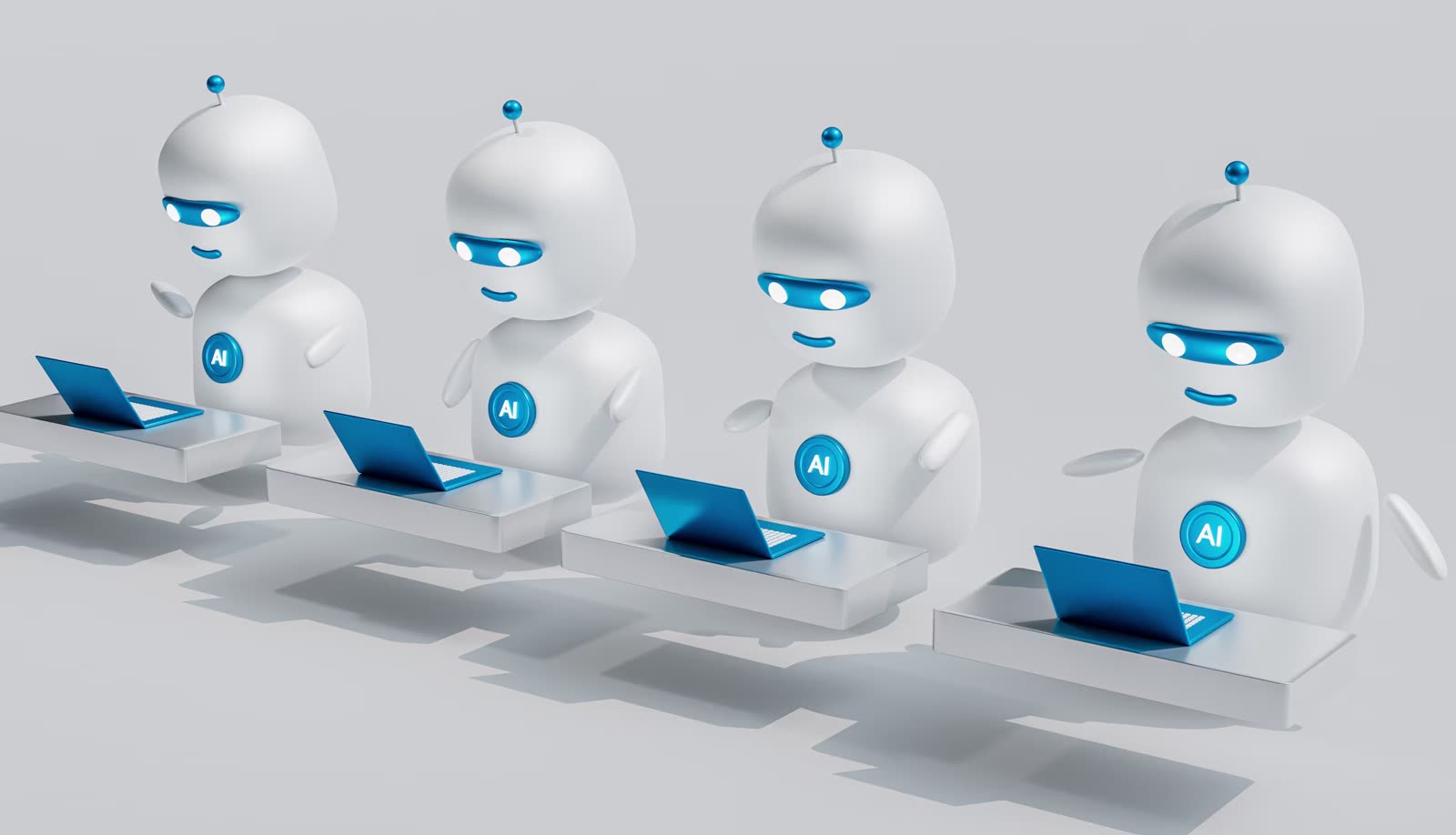
Now, those parts aren’t only human. AI agents are no longer just coding assistants or documentation summarizers; they’re starting to behave like teammates.
I’ve been experimenting with CrewAI, an open framework that runs locally (and in the cloud as a paid enterprise solution), to simulate and orchestrate a full engineering team. It is designed to create structured, role-based AI teams that work together on complex objectives.
Understanding CrewAI: the building blocks
There are three core concepts: Agent, Task, and Crew.
1. Agent
An Agent is a role-specific AI persona with a defined purpose, skill set, and context. A crew might include a frontend engineer focused on interface work, a backend engineer responsible for APIs and data, a lead engineer directing the work, and a QA agent testing for errors and opportunities to improve.
Each agent has a defined role, available tools, and constraints that keep it inside its lane. That makes it more predictable and useful than a free-form prompt.
2. Task
A Task is a well-defined objective assigned to an agent. It can be specific—“Design the database schema for authentication”—or exploratory—“Research approaches to real-time collaboration.” Context, dependencies, and expected output help the right agent produce actionable work.
3. Crew
The Crew is the orchestration layer: the engineering team itself. It distributes work, manages dependencies, and maintains shared context. This is where the approach begins to feel like teamwork rather than a sequence of unrelated AI calls.
Why build an AI engineering team?
The short answer is specialization, scalability, and coordination. A single model can do many things, but too many simultaneous responsibilities can muddy its reasoning. Clear roles produce:
- Better focus. A backend agent thinks about API security, data integrity, and performance rather than typography.
- Parallelism. Multiple agents can work on different parts without waiting in a single queue.
- Modular workflows. Roles can be added, removed, or changed without redesigning the entire process.
- More natural team dynamics. Agents can review one another, ask for context, and build on earlier work.
Where the approach shines
Rapid prototyping
A crew can divide an MVP into parallel responsibilities and integrate the pieces quickly.
Research and feasibility
Specialized agents can compare technical approaches, surface constraints, and test assumptions before a team commits.
Continuous documentation
A documentation role can maintain decisions and implementation details as the project evolves.
Internal tools
Well-bounded dashboards, automation scripts, and data pipelines are natural candidates for structured agent workflows.
Training and onboarding
An AI crew can help new engineers understand software architecture decisions, code paths, and team workflows in a role-aware way.
My goal with CrewAI
I want to see how far autonomous, role-based AI collaboration can be pushed in a realistic software engineering environment. I run CrewAI locally for three reasons:
- Control: every part of the setup can be tailored, from models to orchestration.
- Privacy: sensitive project details can stay in-house, especially with local models.
- Performance: local runs can be tuned for hardware and caching.
The target is straightforward: hand an AI crew a project specification and receive a plan, a codebase, documentation, and deployment instructions in a form that remains transparent, auditable, and modifiable.
Setting up the crew
- Define the agents. Write the role, responsibilities, and constraints for each teammate.
- Define the tasks. Break the project into scoped work with clear context and deliverables.
- Form the crew. Establish dependencies and the flow of information between roles.
- Run and review. Monitor the team, inspect intermediate work, and iterate.
The interesting part is not merely assigning tasks. It is the handoff: agents pass outputs to each other, identify missing context, review work, and build toward a shared objective. A typical flow might move from product requirements to software system design, backend APIs, frontend implementation, testing, and deployment.
Benefits and challenges
The benefits are meaningful: focused roles, parallel execution, modularity, consistent process, and documentation by default. The challenges are equally real. Weak role definitions create overlap or gaps; vague tasks create vague output; coordination still has a cost; and every production result requires human judgment and quality assurance.
Looking ahead
I expect more hybrid teams where humans and AI agents work side by side, entire product prototypes are assembled overnight, and specialized crews emerge for narrow, high-context domains.
The useful mental model is not “AI as a tool that knows everything.” It is “AI as a teammate that needs a clear role, enough context, and accountable review.”
Final thoughts
Running CrewAI locally has shown me that AI agents can move beyond autocomplete and question-answering. They can act in coordinated, specialized roles to build complex systems. We are still early, the rough edges are real, and human oversight remains essential—but the potential is enormous.
You can explore my experimental implementation on GitHub.
The future of engineering is not human versus AI. It is humans and AI working together in structured, collaborative systems—and frameworks like CrewAI are bringing that future closer.